Showing posts with label frugal. Show all posts

Monday, June 17, 2013

Capsule Wardrobe by Math: Can You Actually Get Away with It?

Can you get away with it?

I've been fairly obsessed by capsule wardrobes lately. It started with Putting Me Together. Then I started thinking about how to pack lightly. Somewhere along a Pinterest board I came across it. A quick google search led me to this minimalist website.

There's two main arguments about why you should adopt a capsule wardrobe. One is the idea of the signature look. Most likely you already have one, but just don't know it yet--hence all of the clothes that you like, but never wear because it's not you or just doesn't fit your lifestyle. While it's fun to change it up, if you believe in personality, as in a pattern of traits stable through time, then it makes sense that one might have a fashion personality. We usually call it style. After all, isn't the main point of fashion to express our identity? If so, you might want to give a stable impression.

The second reason is minimalism. Minimalism does a lot of things. It makes your closet easier to navigate. It makes your bag easier to pack. It makes you spend less money, but it makes you buy higher quality items (supposedly you save on cost per wear). It forces you to wear those high quality items instead of saving them for a special occasion. It's good for the environment and all those kids in India sewing their hands bloody factory employees working in unsafe conditions in Bangladesh. It also makes you happier because you have restricted choice. Your boundaries make it easier to make decisions, for example, about what to wear.

The downsides of a capsule wardrobe are that you might run out of clothes or get bored with what you have, or people might start looking at you weird.


No, you can't wear the same thing every day. Not even if it looks awesome.

Also, looking at a lot of capsule wardrobes online, I found them to be unrealistic. For one thing, they didn't take into account exercise attire. For another thing, they seemed to be limited to cold weather.

Then it hit me: these capsules are only meant to last one season. Now I understood how any red-blooded woman could stand to only have 10-30 items of clothing. They really had 40-120.

Either this person doesn't have summer where she lives, or this capsule wardrobe is just for winter.

It seems like most capsule wardrobes are 10-30 items including shoes, but not including accessories and essentials such as socks and underwear. There are some nice examples of 9 pieces 14 ways and whatnot, but it's not really that impressive. It's simple permutational math, as my high school calculus teacher pointed out. Except, as my calculus teacher's wife pointed out, most women are picky about what shoes can go with what outfit, so the real trick is to make sure everything can go with everything else. Still, can you get away with wearing the same 30 things for three whole months?

Enter my nerdy spreadsheet:


Okay, so it's 32 items, but notice that it includes a category for exercise. I decided that I had 4 dimensions in my life. Depending on your lifestyle, you may have more or less. For each dimension, I had 8 items of clothing. While there are specific exercise items that I would not want to wear for any semi-formal public place (sweat pants probably are a no-go), it also gives me a chance to cheat (I'm never going to wear a dress while working out--but it's great to have four different types of dresses).

Scarves are an accessory, but I decided to include them because I want to cut down on my scarf collection since I always wear the same ones again and again anyway. It might even encourage me to use the ones I'm too afraid to wear for fear of ruining them. Also, scarves are great wardrobe expanders. 


Wendy's Lookbook

So would this get me through winter?

Disclaimer: I only really care about tops. I don't care if you wear a shirt with jeans one day and with slacks another--to me it's still the same outfit. But if you wear slacks with one shirt one day and then another shirt another day--to me that's a different outfit.

Assuming that your casual shirts, fancy shirts, and at least one of your exercise shirts can be worn to work, then you have 8 different outfits including your work dress. Let's see how many times we can repeat these tops without getting boring.

1. Plain
2. Work cardigan
3. Fancy cardigan
4. Thick belt
5. Thin belt
6. Work scarf
7. Fancy scarf
8. Casual scarf

More tips from Putting Me Together here.

That's 64 combinations right there. Also, though I don't consider wearing a top with a different pair of pants a new look, skirts are a different matter. So if you can wear all of the tops with a skirt, then multiple that times 2. So these 32 pieces will take you through winter and fall easily. Also, to be honest, I'll wear some of the tops from my Summer/Spring capsule as well. Technically I have 64 items, but it's for the year.

With this type of logic, you can do the 33 in 3 challenge in no time.

Wednesday, May 22, 2013

Would Swishing by Any Other Name Be as Cheap?


Swish (v): to rustle, as in silk,
or your friends' clothes.
I swished this weekend. Or rather, I went to a clothing swap. It was awesome. Free clothes, timed conditions--it was like being on a game show. There was also socializing and snacks. One group I hooked up with had a whole strategy down. While we were still arranging our discarded clothes, they gathered their favorite items into a corner.

The way it worked (at this particular exchange) was that each person (girl) drew a number, 1 through 3. 1s would go first, then 2s, then 3s. Whoever happened to get a 1, would grab as many of the most coveted items as she could.

We would all have five minutes to grab six items at a time.

One of our group was a 1, and grabbed many nice things. I was a 2, and missed out on some asymmetrical braided leather sandals, but I grabbed more of the coveted pile. Actually, since I'm leaving the country soon, it was my intention only to dump, not to grab, and then see if I could live on my assigned capsule wardrobe.

But there were so many nice things.


Price of a new Banana Republic Skirt 
at Banana Republic: $80
 Price of a used Banana Republic skirt
at a swish: $0

One girl grabbed dress after fabulous dress, even as the rounds went on. I was inspired to do a little hunting myself, and probably grabbed some things I didn't need (but hey, it was free!). The gratis nature of the activity also encouraged me to try on or grab things that I wouldn't normally have bothered with. I had never been a bag person before, but I took home half a dozen (partially justified by how I would be more in need of bags to compartmentalize my things). I also got a dress that needed to be fitted, a pearl necklace, and a black pencil skirt from Banana Republic--just what I needed seeing that I my work skirts had gotten too frayed, too small, or too warm for the weather.

I had brought shoes, skirts, dresses, tops, jackets, coats, and jewelry. Some of it, I was sad to see go, but I was also mollified to see my peacock green dress from Thailand to go to one of my friends. Another dress, a black and white lace confection that had never looked good on me, was claimed by another girl who made it work. It made it easier to see my former clothes go, seeing other people wanting them. It also flattered my sense of style.


Bags to bring clothes to and from home vs. Bags to bring home.
I went in with a large trunk and a full bag and came out with few enough bags and clothes that they could fit inside the black traveling bag I had originally brought. Other girls recounted their own successes. They had come with two bags and come out with one. One girl was disbelieving. She had come with two bags and come out with three! There were still a ton of clothes left in the swap room. They would be left there until the next clothing exchange. Sometimes the owner of the property made donations to charity. Other times, when she was sick of her closet, she would go down and hunt for something new.

Swishing is a great way to rustle up some new clothes and accessories for yourself. It's a great way to reduce and revitalize your wardrobe. It's good for the environment, is great for socializing, and doesn't cost a thing. Organize one in your town this weekend.


Friday, April 19, 2013

20 Reasons Not to Trash the Dress

Ladies, it is your prerogative to destroy anything you own, as long as it doesn't hurt anyone else. That being said, I think it's a stupid idea. See my full meditation here.

Things you can do with your wedding dress besides trashing it:
  1. Do a fearless bridal that won't totally trash it instead 
  2. Save it for a group friend photo
     
  3. Save it in a frame
  4. Save it for your daughter (at least a piece of it)
    Even if the style is too old-fashioned for her, she can still carry a piece.
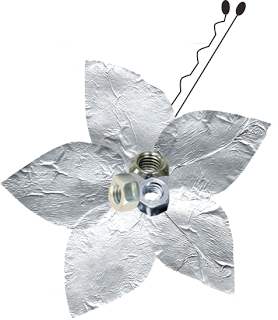
  5. Save it for your 10-year anniversary, where you can accessorize it with aluminum jewelry (apparently it used to be valuable)
    From Chloe's Ethical Accessories
  6. Save it for your vow renewal
    Even happier, now that you know what marriage is like. (AinaKai Photography)
  7. Resell it
  8. Donate it
  9. Rent it out to other brides
  10. Rent it out to people who need full-length white dresses
    See your dress on stage
  11. Better yet, lend it out (it will make you happier)
  12. Make stuff out of it
  13. Dye it and wear it
  14. Shorten it and wear it
  15. Convert it and wear it (especially if the dress had a nice bodice)
    Lingerie or daring top?
  16. Wear it when you're feeling sassy
    Dance when nobody's watching
  17. Wear it when you're feeling down
    Remember this?
  18. Wear it for Halloween
  19. Wear it to the Brides of March
    Be truly daring, and wear it while shopping and drinking about town
  20. Wear it out to a different Starbucks every week for free coffee
    Who's to say you're not getting married that day? You're wearing a wedding dress, aren't you?

Friday, January 18, 2013

Diamonds Are a Scam


Look at that diamond above. Pretty, isn't it? I admit, before I started writing this, I went to etsy, where I had oft seen many such pretty, conflict-free diamonds. I thought it was only fair to remind myself, and you, dear reader, of what you're missing out on. As Those sparkling facets wink at you. They beckon, tempt and eventually seduce you."

But this post is about how diamonds a even more of a scam than I had imagined. Sure, diamonds are forever, but they're made up of one of the most common substances on earth. In its pure, non-compressed form, it resembles that graphite we put in our mechanical pencils (and actually, according to my Chemistry teacher, there is some decay, but that's not relevant for people who are not going to live for thousands of years). A diamond's durability is one of the few qualities it has that actually renders it useful, just as gold became valuable because of its malleability and the fact that it doesn't tarnish (sorry, silver). If you just want something shiny, try cubic zirconia. They're actually almost as hard as diamonds, and much superior in color, clarity, and price.

Most of a diamond's value though, comes from its rarity. A false rarity. Despite all of the horrors that come about from the mining of diamonds, really, they wouldn't be worth so much if De Beers hasn't boarded up so many diamond mines to keep demand higher than production.

Because of all these things, I had decided long ago that I wasn't going to pay a bunch of money for a shiny rock made of the most abundant element in the universe, only kept artificially rare, and quite likely responsible for bloodshed. Then I read an article. It isn't even a new article, but a reprint from 1982! It chronicles the history of just how much De Beers is screwing the American* consumer.

*Despite Cartier being a major purveyor of diamond engagement rings, most French don't wear diamond engagement rings. The best evidence I can find, other than the Atlantic article, is this forum.

To summarize, De Beers realized that they couldn't saturate the diamond market, so they decided to completely control it and limit production. They even made a deal with a Russian diamond company to sell small (less than one carat) diamonds for awhile until they started losing money on large diamonds.Their marketing campaign to convince Americans to buy more expensive diamond rings really started in 1938. Yes, there was a tradition of buying diamond engagement rings already, but with the help of Hollywood, they really cemented the connection between diamonds and romance. In three years, they had increased diamond consumption by 55% By the end of the 1950s (a time when many American traditions sprouted up) "[t]he message had been so successfully impressed on the minds of this generation that those who could not afford to buy a diamond at the time of their marriage would 'defer the purchase' rather than forgo it." In other words, people would put their lives on hold so they could buy not a home or a car or baby supplies, but a rock.

The real meat of the article though, is when it talks about how De Beers kept demand for diamonds up by convincing women to never sell their diamonds. Think of how many diamond rings are sold every year. For the past 70 years. If those diamonds were to ever enter the diamond market, there would be a huge fluctuation in price of diamonds. But these diamonds will never make it into the market, advertisers have convinced people that one should never sell one's diamonds. Even in death, they should be passed on to ones' heirs.

I have to admit that it's pretty hard to sell a ring that is supposed to be a symbol of your marriage (even if your marriage ends in divorce), but what about diamond necklaces, bracelets, and earrings? Basically, any diamond that you try to sell will go for less than half of what you paid for. Not even the jeweler you bought it from will take it back for close to full value (or even take it back at all). De Beers purposely keeps diamond prices stable by limiting production when needed. That price stability leads people to believe that diamonds are a good investment.

A
n engagement ring, a wedding band, even an anniversary stone--they're more than jewelry--they're symbols of commitment. But don't fool yourself into thinking that they're fiscally viable. Why spend thousands of dollars on something that is only artificially valuable?

For more reasons on why you shouldn't buy diamonds, see this link.