Showing posts with label conspicuous consumption. Show all posts

Wednesday, May 22, 2013

Would Swishing by Any Other Name Be as Cheap?


Swish (v): to rustle, as in silk,
or your friends' clothes.
I swished this weekend. Or rather, I went to a clothing swap. It was awesome. Free clothes, timed conditions--it was like being on a game show. There was also socializing and snacks. One group I hooked up with had a whole strategy down. While we were still arranging our discarded clothes, they gathered their favorite items into a corner.

The way it worked (at this particular exchange) was that each person (girl) drew a number, 1 through 3. 1s would go first, then 2s, then 3s. Whoever happened to get a 1, would grab as many of the most coveted items as she could.

We would all have five minutes to grab six items at a time.

One of our group was a 1, and grabbed many nice things. I was a 2, and missed out on some asymmetrical braided leather sandals, but I grabbed more of the coveted pile. Actually, since I'm leaving the country soon, it was my intention only to dump, not to grab, and then see if I could live on my assigned capsule wardrobe.

But there were so many nice things.


Price of a new Banana Republic Skirt 
at Banana Republic: $80
 Price of a used Banana Republic skirt
at a swish: $0

One girl grabbed dress after fabulous dress, even as the rounds went on. I was inspired to do a little hunting myself, and probably grabbed some things I didn't need (but hey, it was free!). The gratis nature of the activity also encouraged me to try on or grab things that I wouldn't normally have bothered with. I had never been a bag person before, but I took home half a dozen (partially justified by how I would be more in need of bags to compartmentalize my things). I also got a dress that needed to be fitted, a pearl necklace, and a black pencil skirt from Banana Republic--just what I needed seeing that I my work skirts had gotten too frayed, too small, or too warm for the weather.

I had brought shoes, skirts, dresses, tops, jackets, coats, and jewelry. Some of it, I was sad to see go, but I was also mollified to see my peacock green dress from Thailand to go to one of my friends. Another dress, a black and white lace confection that had never looked good on me, was claimed by another girl who made it work. It made it easier to see my former clothes go, seeing other people wanting them. It also flattered my sense of style.


Bags to bring clothes to and from home vs. Bags to bring home.
I went in with a large trunk and a full bag and came out with few enough bags and clothes that they could fit inside the black traveling bag I had originally brought. Other girls recounted their own successes. They had come with two bags and come out with one. One girl was disbelieving. She had come with two bags and come out with three! There were still a ton of clothes left in the swap room. They would be left there until the next clothing exchange. Sometimes the owner of the property made donations to charity. Other times, when she was sick of her closet, she would go down and hunt for something new.

Swishing is a great way to rustle up some new clothes and accessories for yourself. It's a great way to reduce and revitalize your wardrobe. It's good for the environment, is great for socializing, and doesn't cost a thing. Organize one in your town this weekend.


Friday, April 19, 2013

20 Reasons Not to Trash the Dress

Ladies, it is your prerogative to destroy anything you own, as long as it doesn't hurt anyone else. That being said, I think it's a stupid idea. See my full meditation here.

Things you can do with your wedding dress besides trashing it:
  1. Do a fearless bridal that won't totally trash it instead 
  2. Save it for a group friend photo
     
  3. Save it in a frame
  4. Save it for your daughter (at least a piece of it)
    Even if the style is too old-fashioned for her, she can still carry a piece.
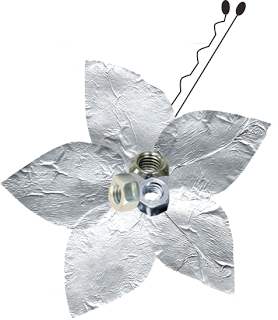
  5. Save it for your 10-year anniversary, where you can accessorize it with aluminum jewelry (apparently it used to be valuable)
    From Chloe's Ethical Accessories
  6. Save it for your vow renewal
    Even happier, now that you know what marriage is like. (AinaKai Photography)
  7. Resell it
  8. Donate it
  9. Rent it out to other brides
  10. Rent it out to people who need full-length white dresses
    See your dress on stage
  11. Better yet, lend it out (it will make you happier)
  12. Make stuff out of it
  13. Dye it and wear it
  14. Shorten it and wear it
  15. Convert it and wear it (especially if the dress had a nice bodice)
    Lingerie or daring top?
  16. Wear it when you're feeling sassy
    Dance when nobody's watching
  17. Wear it when you're feeling down
    Remember this?
  18. Wear it for Halloween
  19. Wear it to the Brides of March
    Be truly daring, and wear it while shopping and drinking about town
  20. Wear it out to a different Starbucks every week for free coffee
    Who's to say you're not getting married that day? You're wearing a wedding dress, aren't you?

Sunday, April 14, 2013

Why Trash the Dress?

There's an incredible amount of energy put into finding the perfect wedding dress. You even need to say yes to the dress, the way you say yes to your fiancé. In addition to the dress, there are the accessories--the bridal shoes, the bridal veil, the bridal jewelry (besides the wedding ring).

Pre-wedding dresses.
There's not just the dress for the wedding! Just as a wedding ceremony is not just a wedding ceremony anymore, but an engagement party, a bridal shower, a bachelor and bachelorette party, a rehearsal dinner, and a wedding, a bride may choose to purchase not only a wedding dress, but also an engagement dress, a bridal shower dress, a bachelorette party dress, a rehearsal dress, and a wedding dress. Plus there's the silk robe to wear when getting dressed for the wedding. The lingerie to wear after the wedding. Plus an all-purpose T-shirt whenever you are feeling sufficiently (or in-sufficiently) bride-like. 

Why all this conspicuous consumption? It's a two-way street. As much as we would like to place the blame solely on the shoulders of the wedding industry, there wouldn't be such a huge supply if there wasn't at least some demand. Sure, some (much) of the demand was artificially created, but girls sure love shopping, especially for pretty clothes that make them feel special.

What about trash the dress, the post-wedding event? Apparently a Las Vegas photographer suggested it. The idea was that he was bored of normal wedding photos. He wanted to do something fun, like an actual fashion shoot, which includes juxtaposing the elegant with the trashy. So he convinced a bride to do the shoot. Now other photographers are pushing the idea. Why?

Vancouver photographer Darcie Radtke says, “A lot of people are interested in trash-the-dress shoots but when it comes to their own dress, they have a fear of actually doing it. But most women have these dresses and put them in their closet and never look at them again. This is a way to have beautiful, lasting images of your dress.”

But don't women already have beautiful, lasting images of their dress from their wedding pictures? I hardly think they need more. It might also be better to have a beautiful, lasting dress (hence many women's fears of trashing them).

Romantically tragic.
I have to admit, as financially irresponsible as the idea is, some trash-the-dress pictures look pretty nice. Besides the romantic and sexy ones (which, again, could occur at a wedding), there are some effects that are hard to achieve without a body of water. Some seem Ophelia-esque (just be careful to not actually become like Ophelia). Some seem daring. How many times are you going to jump off a cliff into the ocean? Maybe a few times. How many times are you going to jump off a cliff into the ocean wearing a thousand dollar dress? Only once, likely, even if you are in the habit of buying thousand dollar dresses.

Once in a lifetime plunge. Literally. Even more so than the wedding itself.
There's a reason for that. Why ruin a thousand dollar dress that you spent months searching for (and then having tailored to your body)? Personally, I wouldn't even trash a hundred dollar dress. I spent money on that dress! I'm going to wear it again. I'm going to wear it until the cost-per-wear is under a dollar, even if I have to wear it to my neighbor's kid's birthday party to do it.


Trash the dress, with friends.
There's other things you can do with your dress besides trash it, even if you aren't going to wear it every day for the next six years to make the cost-per-wear worth it. For one thing, you could save it for a fun friend photo (after all of your friends are married, knock-on-wood).

You could donate it to goodwill or a bride-in-need. Or you can donate it on a more temporary basis to be used in school plays and graduations, or let your kids trash it when they use it for dress up (that's what my fiancé's mother did, and her dress is still in pretty good shape).

You could wear it again when you renew your vows. You can save it so that your daughter (or granddaughter) can wear it (or at least some part of it). You could have the skirt shortened and dye it another color and make it your go-to formal dress.

Suddenly measuring out one's life in coffee spoons doesn't seem so bad.
Maybe that takes away from the singularity of the dress? Maybe. But isn't that what marriage is? The turning of an extravaganza into the quotidian? Isn't that a good thing?

At the very least, you can always try putting on your dress again and head over to Starbucks for a free coffee.

Saturday, April 6, 2013

Why are Weddings such a Big Deal?

Pinterest has a whole section devoted to weddings. Women not even engaged yet (sometimes not even with a partner!) pin their dream weddings. Why so much investment in this ideal? Why is it so pervasive and so overblown?

I have two theories: singularity and identity.

By singularity I mean that for most women, this is the biggest party they will ever throw in their lives, and for many women this is the first party they will throw. For some it will be the only one. At least it seems this way. Both tradition and the wedding market encourage this. Traditionally, getting married is a major milestone. This was when you not only committed yourself to a person for eternity, but also became an adult and moved out of your parents' house and started having sex.

The singularity of the event means that women will pour in a lot of effort to make sure that this day is the perfect day. They will muse about the menu, cogitate about flowers, and agonize over the dress, because there's only one chance that they can get this right--and it will be photographed and filmed for future posterity and facebook.


I found that it takes a lot of pressure off to not think about the wedding as the only party I will ever plan. If something doesn't make the cut or is too prohibitively expensive, I can file it away for some future party, such as an anniversary, my bridal shower, or a friend's wedding (at the risk of becoming a bridemaidzilla). Bacon-wrapped canapes don't fit the theme? I can make them for a dinner party. Peonies too expensive? Hint to husband that they would make a nice anniversary gift. Tulle canopy held aloft by balloons not appropriate for an indoor wedding? Save it for a friend's bridal shower (or birthday).

It's very liberating. Instead of agonizing over whether or not I'm making the best choice, I can put it down to deliberating about the right choice, and comfort myself with the idea that I can still experience all those other photo-worthy displays some other time in my life (if I still care).

What about identity? After all, a wedding is now less of a community event and more of an expression of the bridal couple (or at least the bride). It could express how they have money, or it could express that the couple enjoy the irony of wearing expensive outfits and drinking fancy signature cocktails out of mason jars in a barn. Seeing that this is a large gathering of realtime people, the couple probably want to represent themselves well. It's an expression of what they value, calculated by what they choose to spend their money on.

Offbeat bride celebrates this. The introduction to the book talks about how it was important for the wedding to convey how the bridal couple were, instead of going through the motions of wearing a veil and walking down an aisle to appease family and community. One Perfect Day warns that this is not only a marketing tactic, but a harbinger of a breakdown of community. An Atlantic article warns that just because your wedding isn't unique, doesn't mean you aren't getting married.

My take aligns more with offbeat bride. Even though a wedding is in some ways more about the people invited than the bridal couple, if the community didn't accept the couple for who they were, I don't think they would go. Also, a lot of the hipster ideas regarding rented barns and mason jars are, in fact, ways of saving money, though the wedding industry has proprietized those practices. As for the Atlantic article--isn't that the point? To express oneself while still participating in something that, even 50 years from now, you can point to in your outdated video to your grandchildren and still have them recognize it as a wedding?

Anyway, I wanted a lot of things for my wedding, not out of practicality, but because I had an idea of it in my head or because I thought it went with a theme I liked. I spent a lot of money on flowers because I wanted a bouquet (as did my bridesmaids). I didn't want all-Asian catering, even though it would have been cheaper. I am going to get married in an Asian-American Museum, not only because it's relatively cheap and the right size and I'm afraid of getting married outside because of the weather, but because I thought it was appropriate for my identity. That's why I stuck with those choices even when costs and hidden charges got racked up.

Vera Wang's 2013 red bridal collection. To aim at the Chinese market?
I also considered wearing a red dress (one part practicality, one part tradition, two parts because it matches the venue). My friend asked me, why not get married at city hall if I'm not going to wear a white dress? Why have any of it? Why invite people from both sides of the Pacific to this thing where we pay for them to eat fancy food and unlimited wine and beer, in the process coordinating headache-inducing schematics including timelines, spreadsheets, websites, and $200 worth of flowers, for the love of all that is good and holy? (My fiance wonders this whenever I try to coordinate with him.)

Well, because I still wanted a wedding, even if it's not completely traditional. To say that a different colored dress would invalidate that was pretty insulting.

It will be (I swear) the most expensive party I will ever throw in my life. It will have the largest number of guests (that I personally invite and know of). It is the only time I will ever rent out a venue or hire a caterer. It is (hopefully) the only time I will ever get married.

It is also a chance to express myself, my culture, and my love for my husband-to-be.

Friday, January 18, 2013

Diamonds Are a Scam


Look at that diamond above. Pretty, isn't it? I admit, before I started writing this, I went to etsy, where I had oft seen many such pretty, conflict-free diamonds. I thought it was only fair to remind myself, and you, dear reader, of what you're missing out on. As Those sparkling facets wink at you. They beckon, tempt and eventually seduce you."

But this post is about how diamonds a even more of a scam than I had imagined. Sure, diamonds are forever, but they're made up of one of the most common substances on earth. In its pure, non-compressed form, it resembles that graphite we put in our mechanical pencils (and actually, according to my Chemistry teacher, there is some decay, but that's not relevant for people who are not going to live for thousands of years). A diamond's durability is one of the few qualities it has that actually renders it useful, just as gold became valuable because of its malleability and the fact that it doesn't tarnish (sorry, silver). If you just want something shiny, try cubic zirconia. They're actually almost as hard as diamonds, and much superior in color, clarity, and price.

Most of a diamond's value though, comes from its rarity. A false rarity. Despite all of the horrors that come about from the mining of diamonds, really, they wouldn't be worth so much if De Beers hasn't boarded up so many diamond mines to keep demand higher than production.

Because of all these things, I had decided long ago that I wasn't going to pay a bunch of money for a shiny rock made of the most abundant element in the universe, only kept artificially rare, and quite likely responsible for bloodshed. Then I read an article. It isn't even a new article, but a reprint from 1982! It chronicles the history of just how much De Beers is screwing the American* consumer.

*Despite Cartier being a major purveyor of diamond engagement rings, most French don't wear diamond engagement rings. The best evidence I can find, other than the Atlantic article, is this forum.

To summarize, De Beers realized that they couldn't saturate the diamond market, so they decided to completely control it and limit production. They even made a deal with a Russian diamond company to sell small (less than one carat) diamonds for awhile until they started losing money on large diamonds.Their marketing campaign to convince Americans to buy more expensive diamond rings really started in 1938. Yes, there was a tradition of buying diamond engagement rings already, but with the help of Hollywood, they really cemented the connection between diamonds and romance. In three years, they had increased diamond consumption by 55% By the end of the 1950s (a time when many American traditions sprouted up) "[t]he message had been so successfully impressed on the minds of this generation that those who could not afford to buy a diamond at the time of their marriage would 'defer the purchase' rather than forgo it." In other words, people would put their lives on hold so they could buy not a home or a car or baby supplies, but a rock.

The real meat of the article though, is when it talks about how De Beers kept demand for diamonds up by convincing women to never sell their diamonds. Think of how many diamond rings are sold every year. For the past 70 years. If those diamonds were to ever enter the diamond market, there would be a huge fluctuation in price of diamonds. But these diamonds will never make it into the market, advertisers have convinced people that one should never sell one's diamonds. Even in death, they should be passed on to ones' heirs.

I have to admit that it's pretty hard to sell a ring that is supposed to be a symbol of your marriage (even if your marriage ends in divorce), but what about diamond necklaces, bracelets, and earrings? Basically, any diamond that you try to sell will go for less than half of what you paid for. Not even the jeweler you bought it from will take it back for close to full value (or even take it back at all). De Beers purposely keeps diamond prices stable by limiting production when needed. That price stability leads people to believe that diamonds are a good investment.

A
n engagement ring, a wedding band, even an anniversary stone--they're more than jewelry--they're symbols of commitment. But don't fool yourself into thinking that they're fiscally viable. Why spend thousands of dollars on something that is only artificially valuable?

For more reasons on why you shouldn't buy diamonds, see this link.